IRSA Taranto CNR

The REMEDIA Life project (REmediation of Marine Environment and Development of Innovative Aquaculture: exploitation of edible/not edible biomass) is an EU-funded project coordinated by the University of Salento and partnered by the Institute of Water Research (IRSA) of the CNR Taranto Branch, the University of Bari 'Aldo Moro' and the aquaculture enterprise 'Maricoltura Mar Grande'.
The project was developed to demonstrate the effectiveness of an Integrated Multitrophic Aquaculture (IMTA) system as a means to mitigate the negative environmental effects in a coastal area of the Mar Grande of Taranto where a mariculture plant is located. The project envisages, for the first time in Europe, the use of an integrated system that, in addition to fish farming, includes a new set of stress-resistant bioremediation organisms such as polychaetes and sponges whose bioremediation performance is more effective than the use of mollusks alone. At the same time, the cultivation of certain macroalgae species, which are generally particularly difficult in the Mediterranean, is tested, and their bioremediation capacity is evaluated.
The project focuses on demonstrating that the innovative system developed can lead to the proper exploitation of waste from fish farming by generating various co-products: in addition to fish, mussels/oysters, polychaete annelids, macroalgae and sponges are obtained in each production cycle. The diversification of production can represent an added value for the company, opening up new markets in relation to the marketing of non-edible biomass, which represents a by-product of high commercial value in a circular economy perspective and in line with the 'BLUE GROWTH' themes.
Biomass could be effectively used to produce biotechnological products including an innovative feed (which can be supplied directly on the farm during the early stages of fish farming), fertilizers and bioactive compounds useful in the pharmaceutical and nutraceutical fields. In addition, polychaetes could be commercialized in the fishing (bait) and aquarium sectors. The implemented multi-trophic aquaculture system also leads to improved rearing performance with reduced risks associated with bacterial contamination of fish products due to the ability of the bioremediators used to break down the various microbial contaminants present in the rearing environment.
Thus, thanks to an ecofriendly management of the enterprise in the short/medium term, a bioremediation of 70% of the water surrounding the mariculture plant is achieved, with a considerable improvement in environmental conditions and a new-found balance of the marine ecosystem.
Discover the other initiatives

Transforms stone waste into an eco-friendly, 3D-printable mortar for furniture and construction components, reducing waste, disposal costs, and CO2 emissions

Designs cryogels for the efficient removal of toxic contaminants from water and the recovery of valuable elements

2pack aims to create a water-repellent paper-based material that is easy to recycle, using fish waste and other non-food organic residues.
-277x184.jpg)
Myconic aims to reduce the use of thermoplastics and other unsustainable materials by developing and producing regenerative alternatives from agri-food waste and mycelium, the root system of fungi.

AraBat is a startup that develops innovative solutions for the sustainable recycling of spent lithium batteries, combining circular economy principles with bioeconomy.
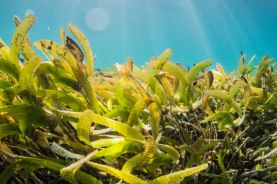
Natural biostimulants from algae to reduce environmental impact and promote more sustainable agriculture

The Hydrogen Valley project in Taranto aims to make Taranto a strategic hub for the production, storage and use of green hydrogen.

The desalinator on the Tara represents a strategic infrastructure to address the challenges related to water resilience in the Apulia region.

The Tamburi The District Urban Forest Project is an environmental and landscape redevelopment initiative for the area, creating a green lung capable of absorbing pollutants.
-277x184.jpg)
A project to transform Taranto into an international center of excellence for research and innovation in sustainable health.

The “Italian Biennale of the Mediterranean,” is an international cultural event to be held in Taranto dedicated to architecture and contemporary art.

Tilebytes is an innovative company based in Taranto, specializing in ICT solutions and advanced technology services.

Acquedotto Pugliese (AQP) has introduced solar greenhouses, an innovative sludge treatment system that optimizes the evaporation of residual water.

The Gennarini purification plant in Taranto has recently undergone significant investment by Acquedotto Pugliese (AQP) to improve its efficiency and environmental impact.

Ecologistic S.p.A. is an Italian company that specializes in providing packaging solutions for the fruit and vegetable sector and in enhancing the recycling of plastics from waste.

The “Green Belt Taranto” represents an innovative model of urban planning, aiming to integrate green as an essential infrastructure and promote a sustainable future for the city and its inhabitants.
-277x184.jpg)
The project focuses on innovative water purification technologies, taking advantage of SBBGR and MULESL systems.
-277x184.jpg)
Environmental upgrading and mitigation of the effects of pollution on various matrices through the application of phytotechnology.
-277x184.jpg)
Agricobots is a company working in the field of robotic systems to optimize agricultural operations and make farming more precise and efficient.
-277x184.jpg)
LORELUX is a brand of NITEKO, an Apulian company specializing in environmentally sustainable lighting solutions. It stands out for producing lamps made of recyclable polymer, designed for urban spaces.
-277x184.png)
Niteko Srl is a design and manufacturing company offering street, industrial, architectural and large area lighting devices with Italian technology.
-277x184.jpg)
Pyrogas Engineering is an innovative startup that has developed a pyrolysis plant that can convert waste into fuel gas.
-277x184.jpg)
Irigom is a company that processes discarded tires and rubber seals by obtaining new products and alternative fuels to traditional ones. Waste is transformed from a problem to a resource.

The Varvaglione wine company has been working in the wine industry since 1921, for four generations, and is one of the emerging realities in the Apulian wine scene.

Itelyum Castiglia is a national leader and international player in industrial waste management and valorization: among the global pioneers of the circular economy, it makes sustainability its strategic axis.

Taranto's BRT project aims to revolutionize urban mobility with a fast and sustainable transportation system, improving connections between major points in the city.

The entire port area of Taranto will be monitored through a network of measurement stations/points, with a defined set of parameters that will be detected systematically over time.

Site and infrastructure development and sustainability of interventions.

Technologies and Processes for Pollutant Abatement and Remediation of Contaminated Sites.

Development of an Italian database of Life Cycle Inventory of Agrifood Products.

